Overview
This case study documents a structured migration of a healthcare application from on-premises infrastructure to AWS. The goal was to improve scalability, enhance availability, strengthen security posture, and implement disaster recovery while optimizing operational costs.
Current On-Prem Challenges
- Single data center dependency
- Limited scalability during peak workload
- Manual backup and recovery processes
- No automated disaster recovery
- High hardware maintenance and refresh cost
- Compliance and data protection concerns
Migration Objectives
- High availability across multiple Availability Zones
- Elastic scalability
- Improved network isolation and security controls
- Automated backup and disaster recovery
- Shift from CapEx to OpEx model
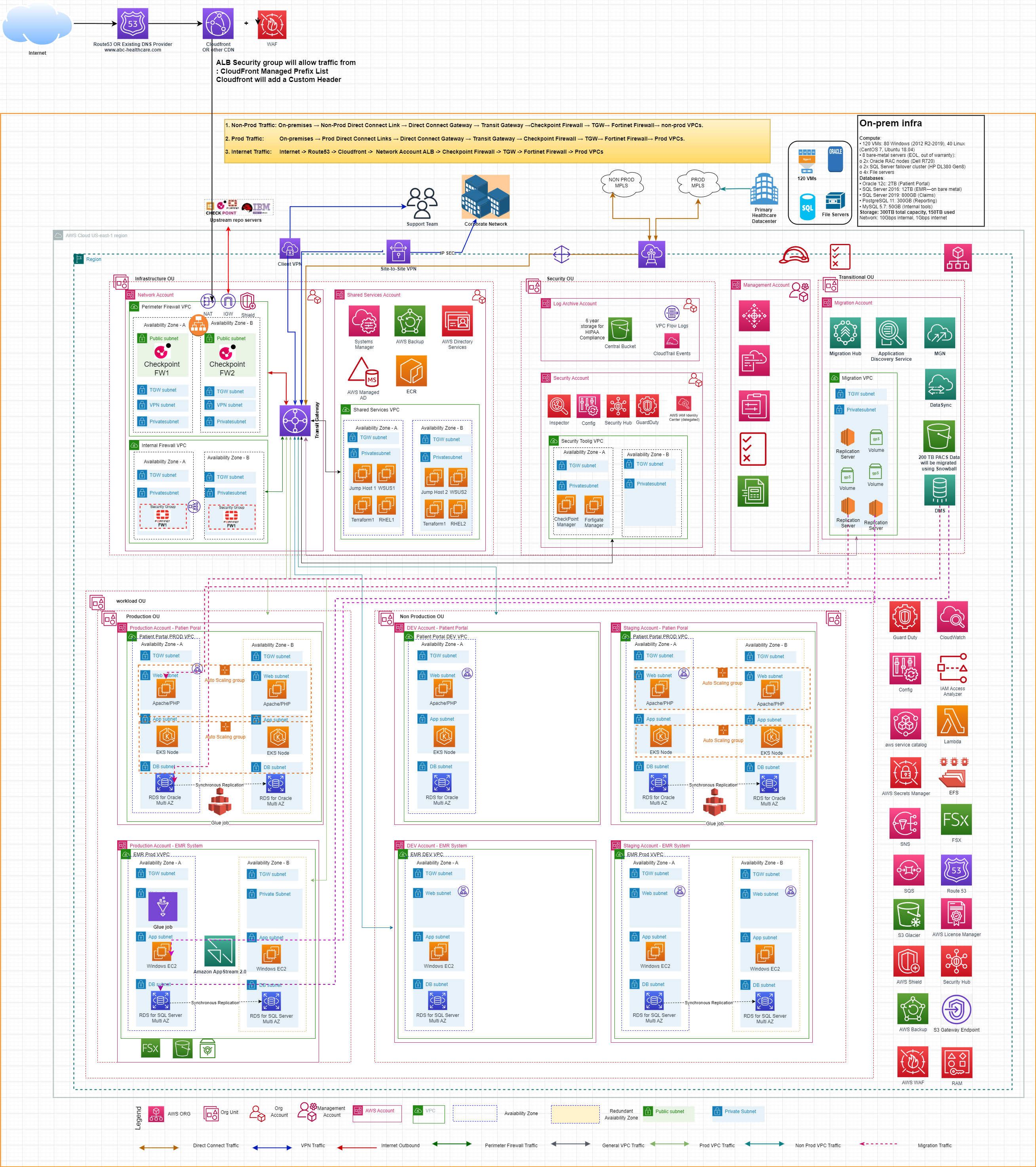
Target AWS Architecture
- VPC with public and private subnets across multiple AZs
- Application Load Balancer (ALB)
- EC2 Auto Scaling Group for application tier
- RDS Multi-AZ deployment
- S3 for backups and static assets
- AWS Backup for centralized backup management
- IAM, Security Groups, and NACL layered security
- CloudWatch for monitoring and logging
Architecture Diagram
Security Considerations
- Database in private subnets
- Encryption at rest (EBS, RDS, S3)
- Encryption in transit (HTTPS / TLS)
- Least privilege IAM access
- Network segmentation using security groups
Disaster Recovery Strategy
- Multi-AZ deployment
- Automated RDS backups
- S3 lifecycle policies
- Optional cross-region replication
- Defined RTO and RPO targets
Cost Considerations
- On-demand instances during migration
- Savings Plans after workload stabilization
- Storage lifecycle optimization
- Monitoring data retention tuning
Business Outcomes
- Improved availability and resilience
- Reduced infrastructure management overhead
- Scalable architecture for peak demand
- Enhanced compliance posture
- Improved cost visibility